Grammar Tips

Discover practical Grammar Tips at Gramnora to improve your English with ease. Explore simple advice, useful techniques, and easy-to-understand guidance for avoiding common grammar mistakes. Learn how to improve sentence structure, word usage, punctuation, and overall writing skills. Whether you are a student, writer, or English learner, our helpful tips make grammar easier to understand and apply with confidence every day.

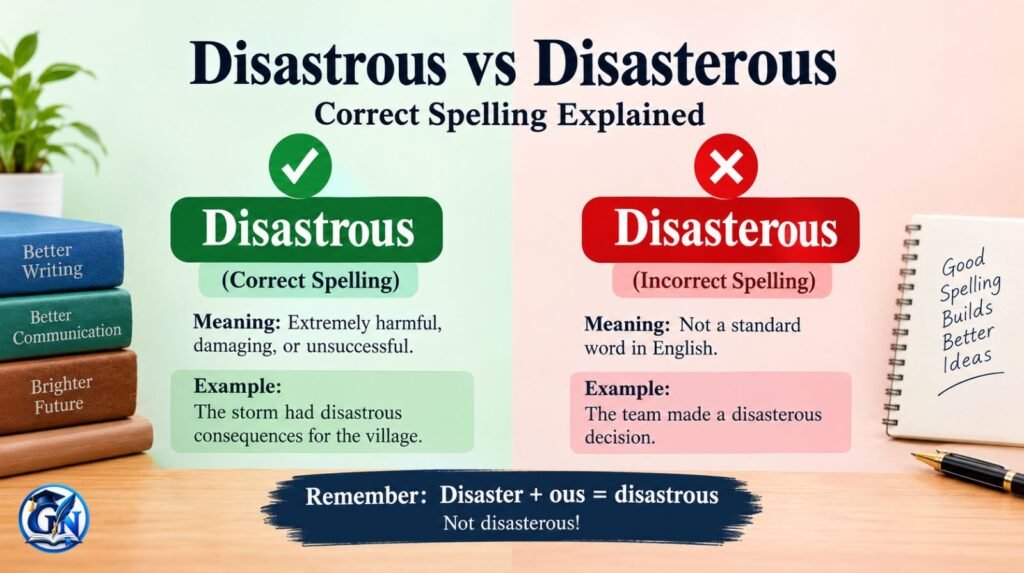
Disastrous vs Disasterous

Disastrous vs Disasterous: Correct Spelling Explained

Have you ever wondered whether the correct spelling is Disastrous vs Disasterous? You’re not alone. English contains many words that seem as though they should follow familiar spelling patterns but actually do not. The correct spelling is disastrous, while disasterous is a common misspelling. Although the incorrect version may look logical because it resembles the

Disastrous vs Disasterous: Correct Spelling Explained Read More »
Anise vs Aniseed

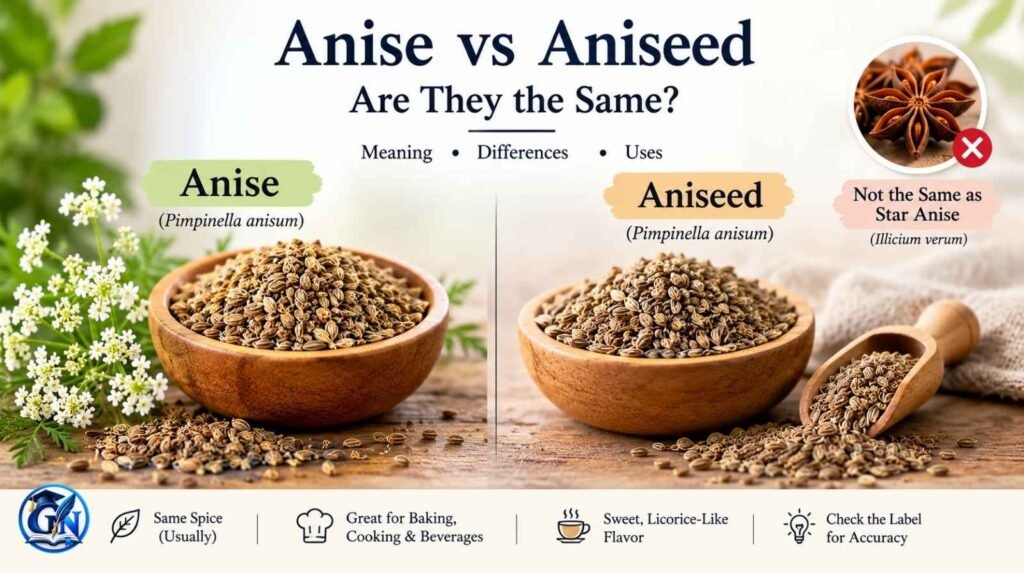
Anise vs Aniseed: Are They The Same? Meaning, Differences, And Uses

Have you ever come across the words Anise vs Aniseed in a recipe and wondered whether they refer to two different spices? You are not alone. These terms can be confusing, especially when cooking instructions, spice labels, and recipes use them interchangeably. The good news is that anise and aniseed generally refer to the same

Anise vs Aniseed: Are They The Same? Meaning, Differences, And Uses Read More »

Guarantee vs Guarentee

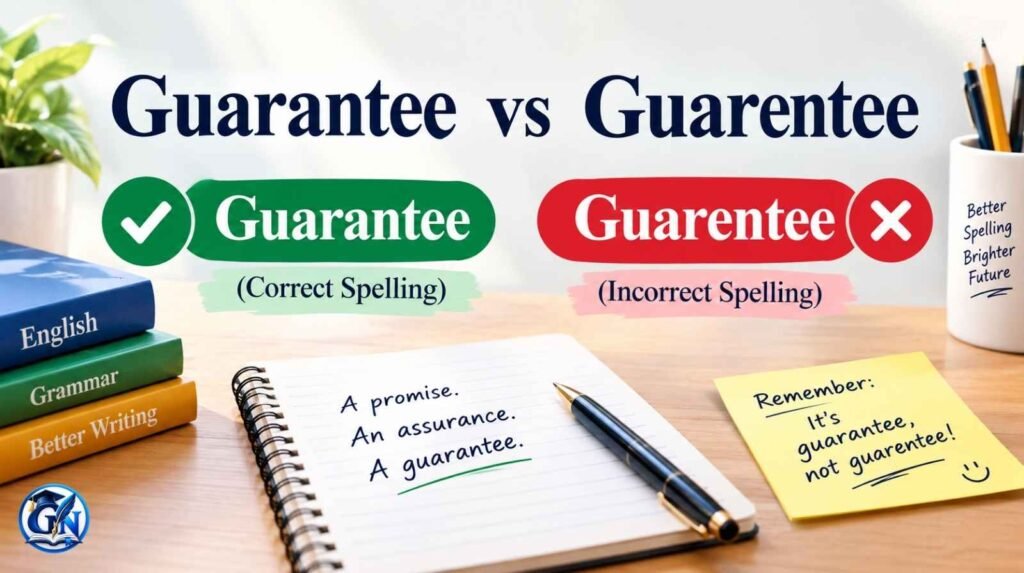
Guarantee vs Guarentee: Correct Spelling, Meaning, And Examples

Have you ever paused while writing a sentence because you were unsure whether to spell the word Guarantee vs Guarentee? You are not alone. English spelling can be confusing, especially when a word sounds different from how it looks. When comparing guarantee vs guarentee, only one spelling is correct in standard English: guarantee. The spelling

Guarantee vs Guarentee: Correct Spelling, Meaning, And Examples Read More »

Accept vs Except

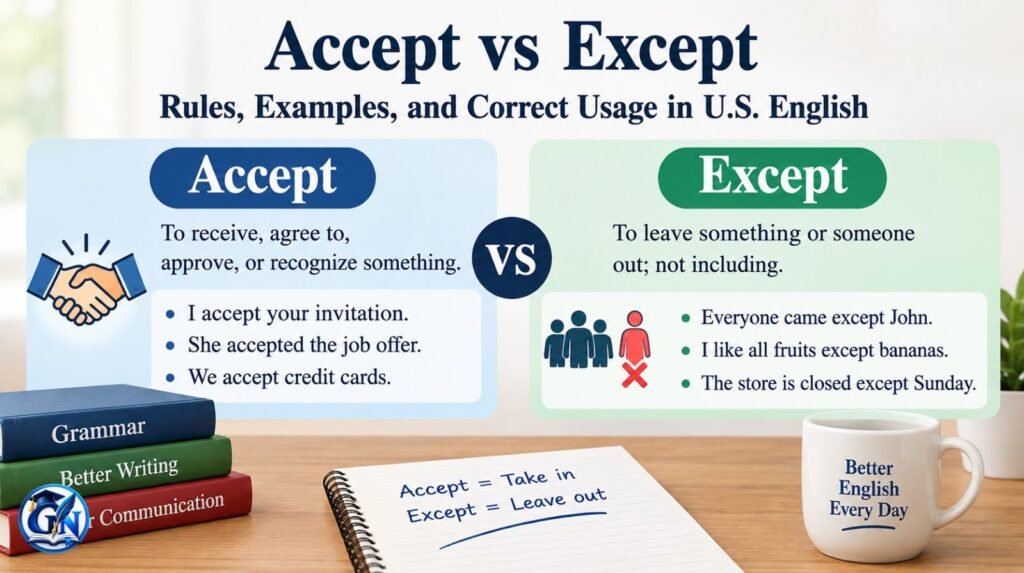
Accept vs Except: Rules, Examples, And Correct Usage In U.S. English

Have you ever written “I except your apology” when you meant “I accept your apology”? You are not alone. Accept vs except is a common source of confusion because the two words look and sound remarkably similar, but their meanings are completely different. In simple terms, accept means to receive, agree to, approve, or recognize

Accept vs Except: Rules, Examples, And Correct Usage In U.S. English Read More »

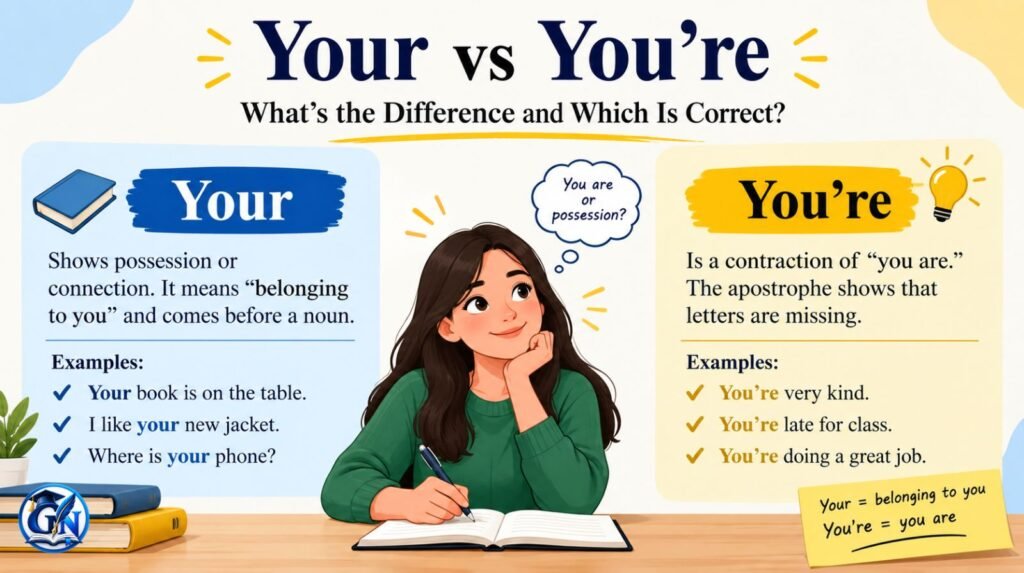
Your vs You’re

Your vs You’re: What’s The Difference And Which Is Correct?

Have you ever written a sentence and suddenly wondered whether Your vs You’re is correct? You are not alone. Your vs you’re is one of those small English grammar questions that can cause surprisingly big confusion. The good news is that the difference is actually simple. Your shows that something belongs to or is connected

Your vs You’re: What’s The Difference And Which Is Correct? Read More »

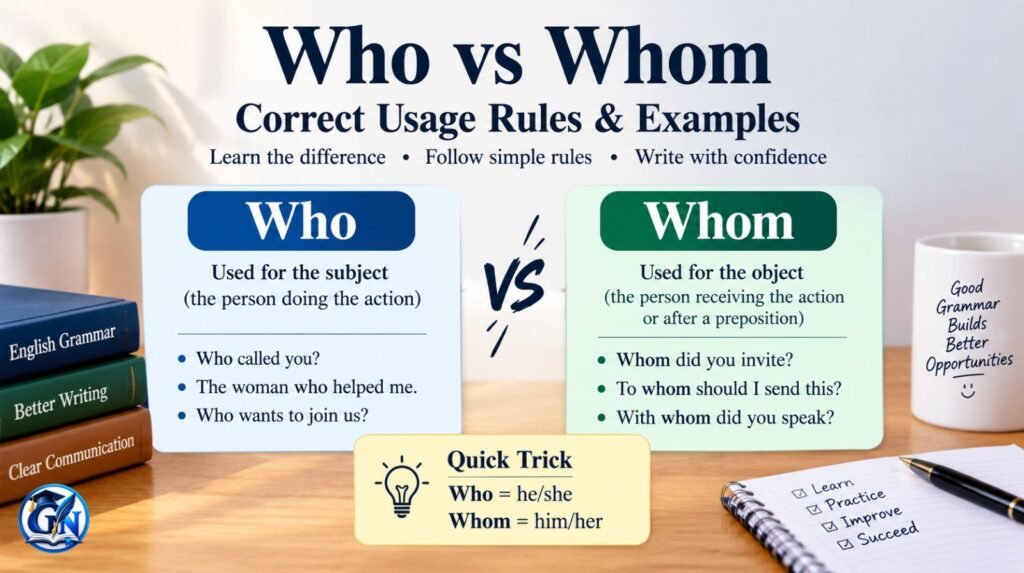
Who vs Whom

Who vs Whom: Correct Usage Rules & Examples For U.S. English

If you have ever paused while writing a sentence and wondered whether who vs whom is correct, you are not alone. Even fluent English speakers sometimes hesitate between these two pronouns. The good news is that the basic difference is much easier to understand than it first appears. In U.S. English, who generally functions as

Who vs Whom: Correct Usage Rules & Examples For U.S. English Read More »

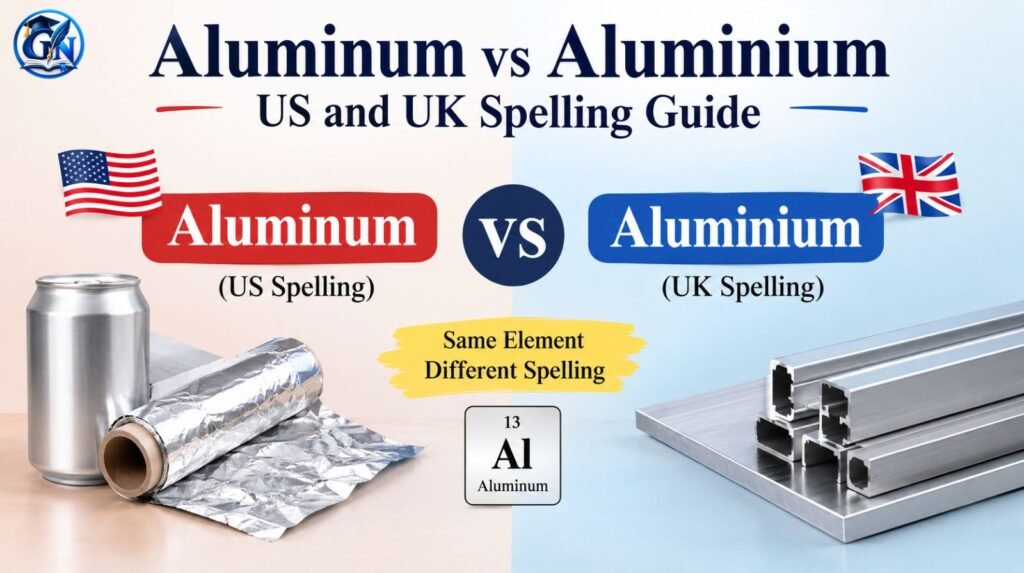
Aluminum vs Aluminium

Aluminum vs Aluminium: Correct US And UK Spelling Guide

Aluminum vs Aluminium is a common spelling difference between American and British English. If you have seen aluminum on a US website and aluminium in a UK textbook, you may wonder which spelling is actually correct. The answer is simple: both aluminum and aluminium are correct. The main difference is regional. Aluminum is the standard

Aluminum vs Aluminium: Correct US And UK Spelling Guide Read More »