
Have you ever come across the words Anise vs Aniseed in a recipe and wondered whether they refer to two different spices? You are not alone. These terms can be confusing, especially when cooking instructions, spice labels, and recipes use them interchangeably.
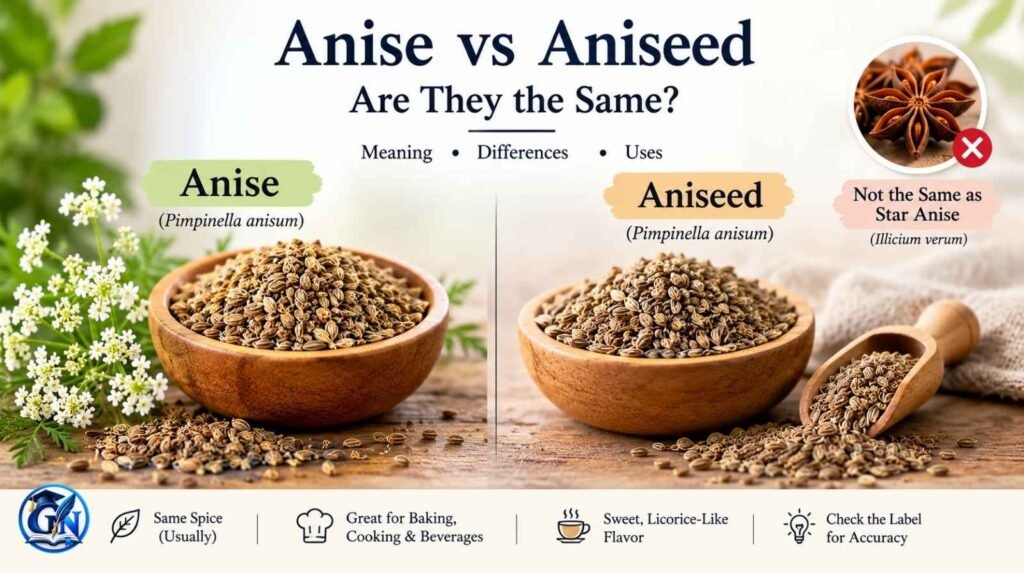
The good news is that anise and aniseed generally refer to the same spice: the seeds of the plant Pimpinella anisum. The main difference is how the terms are used in different regions and contexts. However, it is important not to confuse anise with star anise, which comes from a completely different plant.
In this guide, you will learn the meaning of anise and aniseed, their differences, flavor profiles, common uses, and how to choose the correct ingredient for your recipe.
What Is the Difference Between Anise and Aniseed?

Anise and aniseed are generally two names for the same culinary spice. Both refer to the small, aromatic fruits commonly called seeds of the Pimpinella anisum plant.
The words differ mainly in terminology rather than in the ingredient itself.
What Does Anise Mean?
Anise is the name commonly used for the plant and its aromatic spice. It is widely used in baking, cooking, confectionery, and the preparation of certain beverages.
For example:
- “Add half a teaspoon of anise to the cookie dough.”
- “Anise gives this bread a sweet, licorice-like flavor.”
- “The recipe calls for ground anise.”
In these examples, anise refers to the spice derived from the anise plant.
What Does Aniseed Mean?
Aniseed is another common name for the spice, particularly when referring specifically to its dried, seed-like fruits.
The word is frequently encountered in British English and other English-speaking regions, although usage varies.
For example:
- “Add a teaspoon of aniseed to the bread mixture.”
- “Aniseed is often used in traditional sweets.”
- “The tea contains crushed aniseed.”
These sentences refer to the same type of spice that may be called anise.
Are Anise and Aniseed Interchangeable?
Yes, in most everyday cooking situations, the terms are interchangeable.
| Feature | Anise | Aniseed |
|---|---|---|
| Basic meaning | Aromatic spice from the anise plant | The seed-like spice from the anise plant |
| Botanical source | Pimpinella anisum | Pimpinella anisum |
| Flavor | Sweet and licorice-like | Sweet and licorice-like |
| Common uses | Baking, cooking, and beverages | Baking, cooking, and beverages |
| Regional usage | Common in American English and international recipes | Often associated with British English |
| Main distinction | Naming convention | Naming convention |
The key takeaway: If a recipe asks for anise or aniseed, it usually means the same ingredient. Check the product label, however, because similar names can refer to different spices.
What Are Anise and Aniseed Used For?

Anise is valued for its distinctive aroma and sweet, slightly spicy flavor. Because the spice can be used whole, crushed, or ground, it works in a variety of recipes.
Anise in Baking
Anise is commonly used in cookies, biscuits, cakes, and sweet breads.
Its licorice-like taste adds character to baked goods without necessarily requiring large quantities.
For example:
- Add ground anise to homemade cookies.
- Mix crushed anise seeds into bread dough.
- Use a small amount of anise in traditional cakes.
If you are experimenting with an unfamiliar recipe, start with a small quantity. The flavor can become quite noticeable when too much spice is added.
Anise in Cooking and Beverages
Anise is also used in savory dishes and drinks.
Some cooks add whole seeds to spice mixtures, marinades, or dishes that benefit from a sweet, aromatic note. Crushed seeds can release more of their fragrance than whole seeds.
Anise is also used in herbal infusions and traditional beverages in various cultures.
For example, you might steep lightly crushed anise seeds in hot water to make an aromatic infusion. This is a traditional culinary use, not a substitute for medical treatment.
Anise in Confectionery
The sweet flavor of anise makes it suitable for candies, lozenges, and other confectionery products.
It is particularly useful when a recipe calls for a distinctive licorice-like taste.
Although anise is sometimes used in products that taste similar to black licorice, the final flavor depends on the other ingredients and the preparation method.
How Does Anise Taste Compared With Aniseed?
Because anise and aniseed generally refer to the same spice, they do not have a meaningful flavor difference when they come from the same ingredient.
Both have a sweet, aromatic taste that resembles licorice.
Flavor and Aroma
Anise has a warm, sweet aroma with a recognizable licorice-like character. Its flavor comes largely from aromatic compounds, especially anethole.
The spice can taste slightly different depending on its freshness, storage conditions, and whether it is used whole or ground.
For example, freshly crushed anise seeds may release a stronger aroma than seeds that have been stored for a long time.
Whole Seeds vs. Ground Anise
The form of the spice can affect how it performs in a recipe.
- Whole anise seeds: Useful for infusions, spice mixtures, and recipes where a mild, gradual release of flavor is preferred.
- Crushed anise seeds: Release their aroma more readily and work well in doughs and spice blends.
- Ground anise: Distributes flavor more evenly throughout cakes, cookies, and other baked goods.
Therefore, when comparing two products, pay attention to whether they are whole, crushed, or ground rather than assuming that the words anise and aniseed indicate different flavors.
Can You Substitute Anise for Aniseed?
In most recipes, yes. If both products contain Pimpinella anisum, you can generally substitute one for the other in a similar quantity.
For example, if a cookie recipe requires one teaspoon of aniseed, one teaspoon of anise seeds is usually an appropriate substitute.
However, do not automatically apply this substitution to star anise. Although the flavors are similar, star anise comes from another plant and has a different shape and preparation method.
Anise vs. Star Anise: Why the Difference Matters
One of the most common sources of confusion is the difference between anise and star anise.
Although their flavors are similar, they are not the same spice.
What Is Star Anise?
Star anise comes from the fruit of Illicium verum, an evergreen tree native to parts of Asia. Its dried fruit has a distinctive star-shaped appearance.
Anise, by contrast, comes from Pimpinella anisum, a flowering plant in the carrot family.
The Royal Botanic Gardens, Kew, recognizes Pimpinella anisum as an accepted botanical species. You can check its botanical classification in the Plants of the World Online database.
Anise vs. Aniseed vs. Star Anise
| Feature | Anise | Aniseed | Star Anise |
|---|---|---|---|
| Botanical source | Pimpinella anisum | Pimpinella anisum | Illicium verum |
| Appearance | Small, oval, ridged seeds | Small, oval, ridged seeds | Brown, star-shaped fruit |
| Flavor | Sweet and licorice-like | Sweet and licorice-like | Sweet, strong, and licorice-like |
| Typical form | Whole or ground seeds | Whole or ground seeds | Whole stars or ground spice |
| Interchangeability | Generally interchangeable with aniseed | Generally interchangeable with anise | Not always a direct substitute |
Which Spice Should You Choose?
Choose anise or aniseed when the recipe specifies the small seeds of Pimpinella anisum.
Choose star anise when the recipe specifically calls for the star-shaped spice, such as in certain Asian braises, broths, and spice blends.
For example, a traditional cookie recipe requiring aniseed should not automatically be prepared with the same quantity of ground star anise. The flavor intensity and texture may differ.
Anise vs. Aniseed: Current Facts and Botanical Information for 2025–2026
When comparing the two terms, it helps to separate established botanical facts from changing consumer trends or search statistics.
What Do the Botanical Facts Tell Us?
The accepted botanical name for the anise plant is Pimpinella anisum. Kew’s botanical database identifies it as a species in the Apiaceae family, which also includes plants such as carrots, parsley, and fennel.
The following facts are relevant to readers researching anise and aniseed in 2026:
- One botanical species: Anise and aniseed generally refer to the same culinary ingredient from Pimpinella anisum.
- Different from star anise: Star anise belongs to the genus Illicium, not Pimpinella.
- Different from fennel: Fennel and anise have similar flavor characteristics, but they are different plants.
- Different from naming trends: The popularity of either word in a region does not make the ingredients botanically different.
These distinctions remain useful when reading current recipes, shopping for spices, or researching culinary terminology.
Are There New 2025–2026 Statistics Comparing Anise and Aniseed?
There is no verified, widely accepted 2025–2026 statistic established here that measures the global usage of the two words or demonstrates that one term is universally more popular than the other.
It would therefore be misleading to invent a percentage, search-volume figure, or consumer preference statistic.
For current SEO research, tools such as Google Trends can help compare interest in anise and aniseed. Remember that search interest reflects search behavior, not necessarily the amount of spice sold or the number of people who use each term.
For botanical verification, use Kew’s Plants of the World Online. For website content quality and search visibility, Google’s helpful, reliable, people-first content guidance provides a useful reference.
The important point is that the botanical distinction is well established, while claims about current search popularity require actual, dated data.
How to Choose and Store Anise or Aniseed

Choosing the right product is simple once you know what to look for.
Check the Product Label
When purchasing either spice, look for the ingredient name and, when available, its botanical identity.
If you want anise rather than star anise, check that the package refers to anise seeds or Pimpinella anisum.
This is particularly helpful when shopping online, where product images and common names can sometimes be confusing.
Store the Spice Properly
To preserve its aroma and flavor:
- Store anise seeds in an airtight container.
- Keep the container in a cool, dry place away from direct sunlight.
- Avoid exposing the spice to moisture.
- Consider buying whole seeds and grinding them when needed.
Ground spices generally lose their aroma faster than whole spices because more of their surface is exposed to air.
Follow Recipe Measurements Carefully
If you are substituting anise for aniseed, the same quantity is usually a sensible starting point.
However, consider the form of the ingredient. One teaspoon of whole seeds does not necessarily deliver the same flavor intensity as one teaspoon of finely ground spice.
Taste and adjust when the recipe allows it.
FAQs
Q1: Are anise and aniseed the same thing?
A: Yes. In most culinary contexts, anise and aniseed refer to the same spice obtained from Pimpinella anisum. The terms differ mainly in usage and regional preference.
Q2: Is aniseed the same as star anise?
A: No. Aniseed comes from Pimpinella anisum, while star anise comes from Illicium verum. Both have a licorice-like flavor, but they are botanically different spices.
Q3: Can I use anise instead of aniseed in baking?
A: Yes. If both ingredients are anise seeds from Pimpinella anisum, they are generally interchangeable in baking. Match the form of the spice and adjust the amount according to your taste.
Q4: What does aniseed taste like?
A: Aniseed has a sweet, aromatic flavor often compared with licorice. Its aroma becomes more noticeable when the seeds are crushed or ground.
Q5: Is anise the same as fennel?
A: No. Anise and fennel are different plants, although their flavors share some similarities. Anise comes from Pimpinella anisum, while culinary fennel generally comes from Foeniculum vulgare.
Q6: Is aniseed called anise in American English?
A: Anise is a common term in American English, while aniseed is also understood and used in English-speaking regions. Actual usage varies by recipe, product label, and writer.
Q7: Can I substitute star anise for aniseed?
A: Sometimes, but it is not always a direct substitution. Star anise has a similar flavor but differs in botanical source, shape, and intensity. Follow the recipe’s instructions and use an appropriate amount for the dish.
Q8: Which spelling should I use: anise or aniseed?
A: Use the term that best fits your audience and context. For a U.S.-focused article, anise is a natural primary term, while aniseed is useful as an alternative keyword. Both can help readers understand the ingredient.
Conclusion:
When comparing anise vs. aniseed, the main thing to remember is that the two terms generally describe the same culinary spice derived from Pimpinella anisum. Their difference is primarily linguistic rather than botanical.
Both have a sweet, licorice-like flavor and can be used in baking, cooking, confectionery, and beverages. The important exception is star anise, which comes from a different plant and should not automatically be treated as an identical ingredient.
The next time you encounter anise or aniseed in a recipe, check the ingredient label, consider the form of the spice, and follow the recipe’s measurements.
👉 Explore more useful grammar tips and guides on Gramnora

Explore the world of English grammar with simple explanations, practical examples, and easy-to-follow guides by Zia Tarar, the founder and author of Gramnora. From essential grammar rules and sentence structure to common mistakes and advanced concepts, Gramnora helps learners improve their English, strengthen their writing skills, and communicate with greater clarity and confidence.